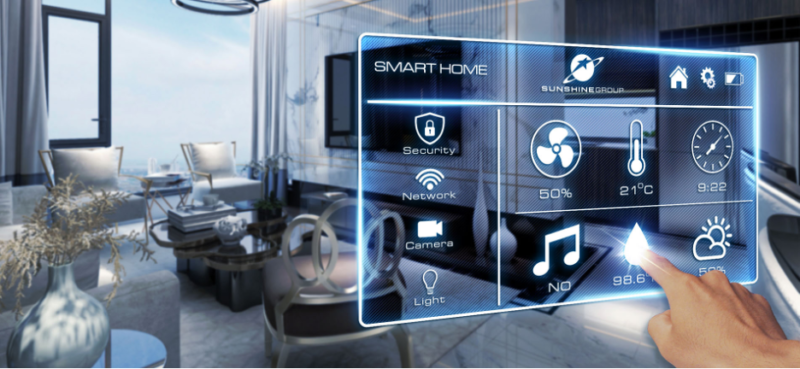
Illustration of Ease of Access to Devices at Home with IoT
The advent of smartphones in technological developments, especially in Indonesia, has made various technological conveniences, particularly IoT, more affordable and increasingly integrated into everyday life. With IoT technology, activities that were once considered highly sophisticated and only depicted in science fiction films (such as controlling appliances with voice commands, automation, and remote control) are now commonplace. What exactly is IoT, and what items can be integrated with it? This article will discuss this in detail.
Understanding IoT
IoT is an abbreviation for Internet of Things, which literally means items connected to or integrated with the internet. However, as the term has evolved, it also encompasses “smart” items that, while not connected to the internet, can still operate wirelessly and require minimal human interaction.
Utilize IoT for a Smart Home
There are many advantages to IoT devices. By integrating IoT devices into your home, you can create a “smart” residence, also known as a smart home. This home can be integrated with IoT-based smart devices to create a safer and more comfortable home for your family.
From a security perspective, CCTV that can be controlled remotely with an internet connection can help you monitor your home from afar while you’re away. Other devices, such as motion-sensor lights, can also deter criminals from entering your home.
From a convenience perspective, these smart devices can do a multitude of things, such as controlling the room/house temperature using a specific app, setting the on/off times for other electronic devices, activating entertainment devices with just your voice, and much more. This creates a modern and futuristic feel for your home.
IoT Disadvantages
While there are many advantages to your home, a smart home integrated with IoT also has disadvantages that should be considered before implementing it. Generally, these items, often labeled as smart devices, are more expensive than conventional devices. For example, a light bulb that automatically turns on and off based on sunlight can cost twice as much as a regular bulb of the same wattage. There are also CCTV cameras that can be monitored and operated remotely using the internet, which also tend to be more expensive than conventional CCTV cameras that use SD card storage.
Furthermore, the availability and stability of an internet connection are also important. You need a constant internet connection to use these devices, or they will not function as well as conventional devices when there is no internet.
That’s the explanation of IoT Smart Homes. If you want to save time, conserve energy, or improve the comfort of your daily life, then this technology is a great way to try. For those of you looking for a home that can also implement this technology, you can trust YUKARI Sawangan to meet your needs. You can contact us at 0823-1133-4579 (WhatsApp), visit us via Instagram DM, or visit the official YUKARI Sawangan website here.
PT. Tact Home Indonesia
At vero eos et accusam et iusto odio
At vero eos et accusamus et iusto odio digniss iducimus blan ditiis